
An emergency fund is the least exciting part of personal finance, and probably the most important. It is the money that stops a car repair, a medical bill or a gap between jobs from turning into credit card debt. This guide covers how much you actually need, where to keep it so it earns something without being risky, and how to build it when your salary already feels stretched.
How much should an emergency fund be?
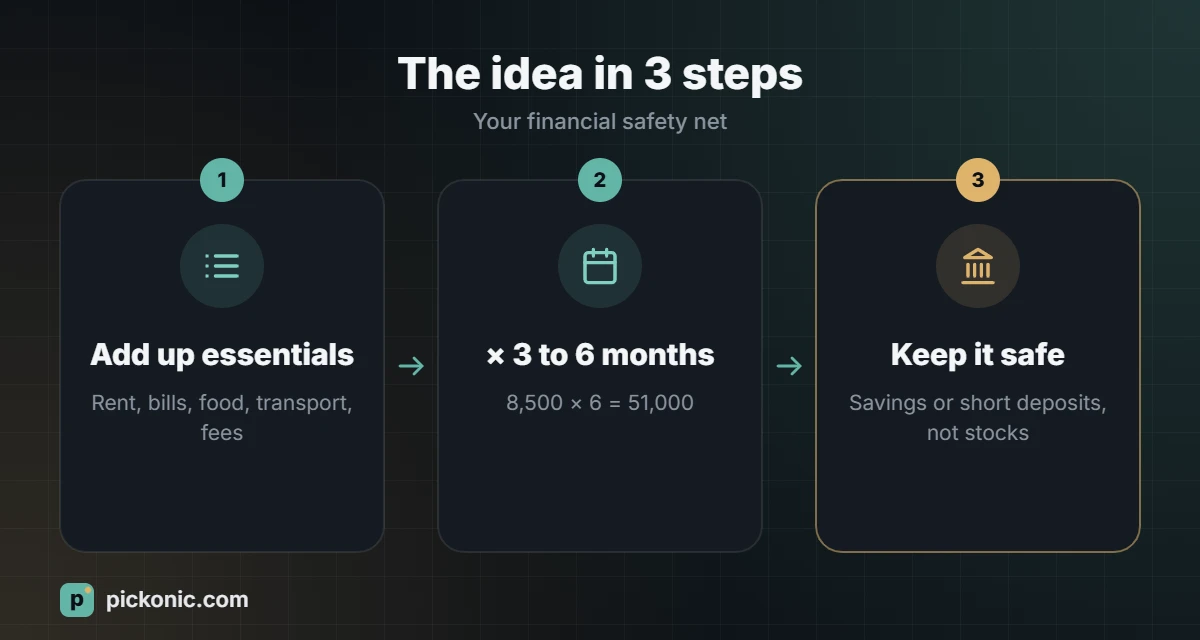
The common rule is three to six months of essential expenses. Note the word essential: this is not your full salary, but what you would need to keep life running if income stopped. Rent, utilities, food, transport, insurance, school fees and minimum loan payments count. Eating out, holidays and new gadgets do not.
| Your situation | Suggested target |
|---|---|
| Stable job, dual income, no dependants | 3 months |
| Single income or family with children | 6 months |
| Freelancer, commission-based or business owner | 6 to 12 months |
| Expat whose visa depends on employment | At least 6 months, plus the cost of relocating if needed |
Example: if your essential costs are 8,500 a month and you support a family on one income, your target is 8,500 × 6 = 51,000. That number can feel huge, which is why the next sections focus on getting there in stages.
Where to keep your emergency fund
An emergency fund has three jobs, in this order: be safe, be available within a few days, and earn something if possible. Returns come last. That rules out stocks, crypto and property, because they can be down exactly when you need the money.
| Option | Access | Return | Notes |
|---|---|---|---|
| Current account | Instant | Usually none | Too easy to spend; fine only for a small first buffer |
| Savings account | Same day to a few days | Low to moderate | The most common home for the main fund |
| High-yield or online savings account | Same day to a few days | Higher than standard savings | Check minimum balances and whether the rate is promotional |
| Fixed or term deposit | Locked for a term; early exit may lose interest | Higher | Good for the part of the fund you are unlikely to need soon |
| Money market fund | A few days | Moves with interest rates | Low risk but not a bank deposit; read the fund details |
For those who prefer Sharia-compliant options, Islamic banks offer savings accounts and term investment accounts based on profit-sharing (mudarabah) or similar structures, with expected profit rates instead of interest.
A simple layered setup
- Layer 1: one month of expenses in a savings account linked to your current account, for instant access.
- Layer 2: the remaining months in a higher-yield savings account or a short-term deposit that you can break if needed.
Keep the fund at a different bank from your everyday account if you are tempted to dip into it. A transfer that takes a day is a useful pause.
What to look for in a savings account
- The real rate. Is the advertised rate only for the first few months, or only on part of the balance?
- Minimum balance and fees. A fee for falling below a minimum can cancel out the interest.
- Withdrawal limits. Some accounts limit free withdrawals per month or require notice.
- Deposit protection and regulation. Use licensed banks regulated by your country’s central bank.
- Easy transfers. You want to move money to your main account quickly, including on weekends.
How to build it when money is tight
- Start with a mini-goal. Save one month of essentials first. It already protects you from most small emergencies.
- Automate it. Schedule a transfer on payday, before you have a chance to spend. Even 5% of take-home pay adds up.
- Save windfalls. Bonuses, salary increases, tax refunds and gifts can go straight into the fund.
- Cut one expense. Cancel a subscription you barely use and redirect that exact amount.
- Track progress. Seeing the percentage of your target grow is motivating. If you have saved 17,000 of 51,000, you are one third of the way there.
What counts as an emergency?
Use the fund for things that are unexpected, necessary and urgent: job loss, medical costs not covered by insurance, urgent car or home repairs, or emergency travel for family. Planned costs, like annual school fees, holidays or a new phone, are not emergencies. Save for those separately.
After you use the fund, rebuilding it becomes your top savings priority until it is back to the target.
If you are weighing a loan against dipping into your savings, run both options through the loan calculator first. The total interest is often what settles it.
Frequently asked questions
Should I pay off debt or build an emergency fund first?
A common approach is to build a small buffer of one month’s essentials first, then focus on high-interest debt like credit cards, then complete the full fund. Without any buffer, the next surprise tends to go back on the card.
Is end-of-service gratuity a replacement for an emergency fund?
It helps, but it is only paid when employment ends and may take time to arrive. You also cannot use it for emergencies while you are still working, so a separate fund is still needed.
Should I invest my emergency fund to beat inflation?
No. Its purpose is to be there when markets or your job are in trouble. Invest money beyond your emergency fund instead.
This article is general information, not financial advice. Rates and products change, so compare current offers directly with banks.